
CMS CY 2027 Advance Notice: Why SNPs Face the Sharpest Impact From Encounter-Only Risk Adjustment

Introduction: This Is Not a Coding Change. It Is a Care Model Reckoning.
The CMS CY 2027 Advance Notice is being framed in many circles as a technical recalibration of Medicare Advantage risk adjustment. That interpretation misses the signal.
By proposing to exclude diagnoses captured through unlinked chart reviews and requiring that conditions be supported by encounter-based claims, CMS is not simply tightening payment accuracy. It is redefining what counts as real, auditable care.
For Special Needs Plans, this shift is existential.
SNPs operate at the intersection of high acuity, longitudinal complexity, and nontraditional care delivery. They also rely more heavily than standard MA plans on documentation that has historically lived outside conventional claim-producing encounters.
Under the CMS CY 2027 Advance Notice, that safety net is being removed.
What CMS Is Actually Changing Under the CY 2027 Advance Notice
The most consequential proposal for MA organizations is the planned exclusion of unlinked chart review diagnosesfrom risk score calculations beginning in 2027.
In plain terms, CMS is saying:
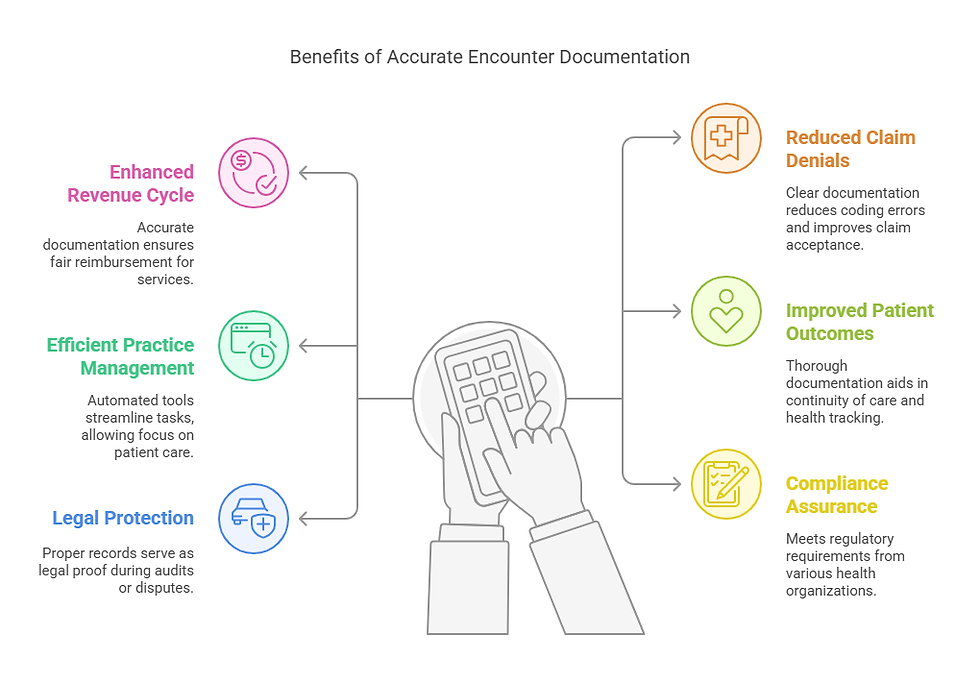
If a diagnosis is not documented in a face-to-face encounter that produces a claim, it will not count for risk adjustment.
This is a decisive move away from retrospective risk capture and toward prospective, encounter-validated acuity recognition.
CMS is making three assumptions explicit:
• Diagnoses should be identified early
• Conditions should be reaffirmed in real clinical encounters
• Documentation, billing, and care delivery should be tightly coupled
These assumptions are unevenly true across MA. They are least true in SNPs.
Why the CMS CY 2027 Advance Notice Hits SNPs Differently
D-SNPs: Higher Encounter Density, Hidden Fragility
Dual-Eligible SNPs benefit from higher overall encounter volume across settings. Members interact with hospitals, specialists, post-acute providers, and long-term services.
That density provides some insulation. But many D-SNPs still rely on:
• Retrospective chart reviews from SNFs and home health
• Diagnoses documented in care management notes that never flow into claims
• Vendor-driven risk capture programs disconnected from encounter workflows
When chart review diagnoses stop counting, D-SNPs face a short-term RAF compression risk even when clinical acuity has not changed.
The operational burden shifts upstream. Providers and care teams must ensure that conditions are reaffirmed during billable encounters, not just recognized somewhere in the system.
C-SNPs: Longitudinal Care Without Claims Discipline
Chronic Condition SNPs are structurally exposed under the CMS CY 2027 Advance Notice.
C-SNPs often manage conditions through:
• Nurse-led care coordination
• Telephonic and virtual touchpoints
• Longitudinal monitoring outside traditional office visits
These interactions are clinically meaningful but frequently non-billable. Historically, chart review filled the gap.
CMS is now removing that workaround.
If a chronic condition materially affects payment, CMS is signaling that it must appear in an encounter that looks real, timely, and auditable.
For C-SNPs, this is not a documentation issue. It is a care model redesign problem. Plans must either re-anchor chronic condition validation to billable encounters or accept structural revenue leakage.
I-SNPs: The Clearest Clinical Picture, the Weakest Encounter Plumbing
Institutional SNPs may be the most clinically grounded and operationally vulnerable.
I-SNPs often rely on:
• Facility-based clinicians
• Interdisciplinary care planning
• Progress notes and care plans that reflect real acuity
Much of this documentation lives outside the claims system. Conditions are known, managed, and acted upon, but not consistently translated into encounter-linked diagnoses.
Under the CMS CY 2027 Advance Notice, those diagnoses may as well not exist.
This creates a paradox. I-SNPs often have the richest understanding of resident complexity, yet the weakest alignment between care documentation and risk-adjusted payment mechanics.
CMS CY 2027 Advance Notice as an Operational Signal
This proposal should not be read in isolation. It aligns with broader CMS moves across ACCESS, LEAD, MAHA ELEVATE, and Star Ratings evolution.
CMS is standardizing its expectations:
• Longitudinal accountability
• Cross-setting visibility
• Audit-ready data liquidity
• Fewer tolerance buffers for manual reconciliation
Risk adjustment is simply the lever being pulled first.
CMS is behaving as if encounter integrity already exists. In many SNP operating models, it does not.
Why This Will Cause Short-Term Pain Even for High-Performing Plans
Even well-run SNPs will feel disruption.
Short-term impacts include:
• RAF compression during transition years
• Increased provider friction around documentation
• Workflow strain on clinical teams asked to validate conditions more frequently
• Vendor contracts that no longer deliver promised value
The organizations that suffer most will not be the least caring. They will be the ones whose operating models assumed retrospective cleanup would always be available.
CMS is removing that assumption.
What SNP Leaders Should Be Doing Now
The CMS CY 2027 Advance Notice gives plans time, but not much forgiveness.
Leadership teams should be asking:
• Where do diagnoses live today that never reach a claim?
• Which care activities are clinically real but financially invisible?
• How often are chronic conditions reaffirmed in billable encounters?
• Are care coordination workflows structurally linked to encounter generation?
This is not about training coders. It is about re-architecting care orchestration so that acuity recognition, documentation, and billing reinforce each other.
Plans that act early can stabilize performance. Plans that wait will experience quiet erosion long before CMS ever announces penalties.
Conclusion: Encounter Integrity Is Becoming Table Stakes
The CMS CY 2027 Advance Notice is not a technical footnote. It is a declaration.
CMS is narrowing the definition of what counts as real care in payment models. Diagnoses must be visible, timely, and anchored to encounters that withstand scrutiny.
For SNPs, this is the moment where care models, not just compliance strategies, are being tested.
The plans that succeed will treat this shift as infrastructure work, not a documentation exercise.
The ones that do not will discover that payment accuracy has a long memory.


Comments