
The SNF Staffing Mandate Is Gone. The Staffing Math Is Not

The SNF staffing mandate is gone. The staffing math is not.
On February 2, 2026, CMS rescinded the federal minimum staffing standards for long term care facilities. The 24 hour, 7 day RN requirement is gone. The fixed hours per resident day thresholds are gone. Many operators felt relief. I understand why.
The rescinded rule asked buildings to meet fixed federal thresholds in a labor market that, across much of the country, could not support them. Facilities were already competing for nurses and aides with hospitals, agencies, home health, assisted living, other SNFs, and industries outside healthcare entirely. The idea that every building could hit the same numbers was never grounded in the reality of running a nursing home.
So the pushback made sense. But relief is not resolution.
The mandate is gone. The accountability is not. In fact, staffing just got harder to manage, not easier. It is moving from a blunt compliance number into an operating model tied directly to outcomes, reimbursement, and referral relationships.
The old question was simple: did we meet a federal staffing minimum? The new question is not. Did we have the right staff, for the right residents, at the right time, with the right clinical information, and did that pattern produce the outcomes CMS, hospitals, payers, families, and referral partners now measure? That is a harder question. It is the one that matters now.

CMS repealed the SNF staffing mandate, not staffing accountability
The federal minimum became the headline because it was specific and easy to argue about. You either had the hours or you did not. But staffing accountability never lived only in that rule. Two pieces of it survived the repeal, and both are load bearing.
First, the enhanced facility assessment survived. CMS repealed the fixed thresholds. It left the facility assessment in place, a separate obligation to staff to the actual acuity of your residents. The blunt ratio is gone. The duty to staff to real need is not. That is not a loophole. That is the whole point.
Second, state mandates remain in force. The federal repeal changes nothing in California, New York, and every other state with its own staffing law. For downstate New York operators, the federal number is gone and the New York number is not. You are still accountable to it, still surveyed against it, still exposed if you miss it.
And staffing accountability now lives inside SNF Value Based Purchasing, where it carries dollars.
VBP is where staffing becomes a financial problem
For FY 2027, the SNF VBP program uses eight quality measures: 30 day all cause readmissions, healthcare associated infections requiring hospitalization, total nurse staffing hours per resident day, total nursing staff turnover, discharge to community, discharge function score, falls with major injury, and long stay hospitalization. The program has grown from one measure in FY 2019, to four in FY 2026, to eight in FY 2027.
CMS already withholds 2 percent of your Medicare Part A payments to fund this program, then redistributes it based on how you perform against those eight measures. Staffing hours, turnover, hospitalizations, falls, infections, and discharge performance now sit in the same financial framework. Once that happens, staffing stops being a scheduler problem. It becomes a clinical, financial, and operational performance problem at the same time.
None of these measures stands alone. Readmissions are not only a nursing problem. Falls are not only a CNA problem. Discharge function is not only a therapy problem. Turnover is not only an HR problem. They are interconnected operating signals, and they move together.
Here is the chain. If a building admits residents it cannot safely manage, staffing stress rises. If staffing stress rises, documentation weakens. If documentation weakens, risk signals get missed. If risk signals get missed, falls, infections, and hospital transfers follow. If hospitalizations rise, VBP performance drops. If VBP performance drops, margin drops.
A broken staffing model does not fail all at once. It fails one missed signal at a time, then all at once at the end of the quarter. You do not fix that cycle with a dashboard at month end. A report tells you what happened. A workflow changes what happens next.
The old staffing conversation was too simple
The old conversation was about ratios. How many residents. How many nurses and aides scheduled. What is our PPD. Are we over budget. Are we under the number. That was never enough.
A building with 120 residents does not have one staffing need. It has 120 resident specific needs that shift by acuity, payer, diagnosis, fall risk, wound burden, therapy need, discharge trajectory, and documentation load. Two days can carry the same staffing hours and completely different risk. One day the census is stable and the high risk residents are well known to the team. The next day brings three hospital admissions, two ED returns, a high acuity managed care case, an escalating behavior, an open wound, two pending discharges, a night shift call off, and agency staff who do not know the building. The number looks the same. The exposure is not.
Ratios matter. Hours matter. Coverage matters. But in skilled nursing the real question is whether staffing is aligned to resident level risk and building level execution. That requires connecting clinical data, admission packets, hospital discharge information, MDS, PBJ, schedules, agency usage, payer, and frontline workflow. Most buildings do not have that today. They have systems, reports, meetings, and good people working hard. What they lack is a real time operating layer that turns all of it into action.
Staffing starts before admission
One of the costliest mistakes in skilled nursing is treating staffing as something that begins after the resident is already in the building. By then the important decisions are already made.
The admission decision sets the staffing burden. The hospital packet sets how much the building knows. The payer sets documentation pressure and length of stay dynamics. The diagnosis and acuity set clinical risk. Medications, wounds, behaviors, functional status, oxygen, dialysis, isolation, and family dynamics all change the operating picture before the resident arrives.
If that information is not captured, summarized, and routed before admission, the building starts behind. The team spends the first 24 to 72 hours catching up. That window is where transfers happen, where orders get missed, where nursing, therapy, social work, admissions, MDS, and the business office fall out of sync. That is where avoidable problems become expensive ones. The future of staffing is not just filling shifts. It is knowing what the building is about to absorb.
Connect staffing to acuity, not just census
Census is a crude measure. A building at 92 percent occupancy with stable long stay residents can be in far better shape than one at 84 percent with high admission velocity, rising managed care complexity, and heavier agency dependency.
Most organizations still look at these variables in separate places. Staffing sits in one system, clinical risk in another, payer in another, admissions in another, MDS and PBJ in others, financial performance in another. Then everyone meets and reconciles the truth by hand. That model is too slow for where CMS is going. If staffing drives VBP, hospital relationships, survey risk, and margin, it has to be managed as part of a connected operating system, not a standalone department.
Where AI actually earns its place
There is a lot of noise about AI in healthcare. Most of it is not useful. In skilled nursing, AI is not about replacing staff. That is the wrong conversation. The useful version helps the staff you already have operate with better information, less administrative drag, and faster escalation when something is going wrong.
That means reading the hospital packet before admission. Identifying the clinical and staffing implications of a new resident. Flagging hospitalization risk earlier. Connecting a change in acuity to a change in staffing need. Surfacing documentation gaps before they become reimbursement or compliance problems. Routing work to the right person, whether that is admissions, nursing, MDS, therapy, social work, the business office, or the administrator. And creating an audit trail of what was found, who was notified, what was done, and whether the loop closed. Ungoverned, AI does not fail quietly. It fails at scale.
That is not a chatbot. That is not a dashboard. That is orchestration. Governance before adoption. And it is what skilled nursing needs.
Do not celebrate too long
The SNF staffing mandate was a blunt instrument. It did not reflect the labor market. It did not fix the workforce pipeline. It did not account for differences in geography, resident mix, or payer mix. Relief is fair.
But the underlying problem did not leave with the rule. Residents still need care. Families still expect answers. Hospitals still want reliable post acute partners. Payers still want fewer avoidable transfers. Surveyors still look at quality. And CMS still ties reimbursement to outcomes.
CMS has proposed a 2.4 percent FY 2027 SNF payment update. On paper that is an increase. In the same rule, CMS opened a request for information on PDPM case mix creep. Industry analysts have flagged that a resulting adjustment could offset much of the increase. A rate update does not solve the margin problem when avoidable hospitalizations, agency usage, turnover, and weak documentation are eroding performance underneath it. The mandate is gone. The math is not.
What SNF leaders control now
The better move is not to wait for the next rulemaking cycle. It is to manage what is already in your hands.
You can see the staffing impact of tomorrow's admissions before those residents arrive. You can identify which residents are most likely to trigger a transfer.
You can tie call offs and agency usage to unit level risk. You can see when turnover is degrading execution.
You can connect falls, infection risk, and discharge readiness back to specific workflow gaps. You can reduce documentation burden without losing clinical specificity.
You can prove the right people saw the right information and acted.
You can turn PBJ, MDS, admissions, clinical documentation, payer data, and staffing into one daily operating model.
The organizations that do this first gain an advantage. Not only with CMS. With hospitals, payers, families, staff, and residents.
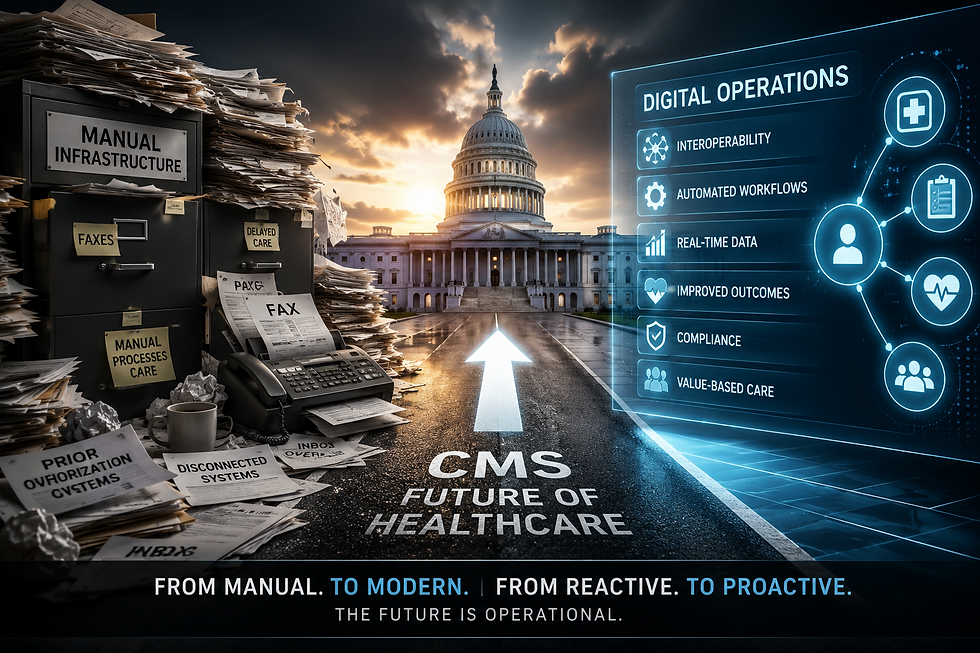
The answer is not another disconnected tool. It is a command layer that connects the systems operators already use, including EHR, staffing, PBJ, admissions, payer, and quality data, and turns fragmented information into governed workflows. That is not a vendor talking point. It is where the economics and the regulations are pushing the entire industry. Staffing, quality, reimbursement, hospitalization, discharge, and resident outcomes are no longer separate conversations. They are one operating conversation.
The mandate made the industry focus on hours. The next phase forces it to focus on execution. That is a harder conversation. It is also where the best operators separate themselves.
Because the question was never simply whether you staffed the building. The question is whether the building had the execution capacity to care for the residents in front of it. That is the math that still matters.


Comments